
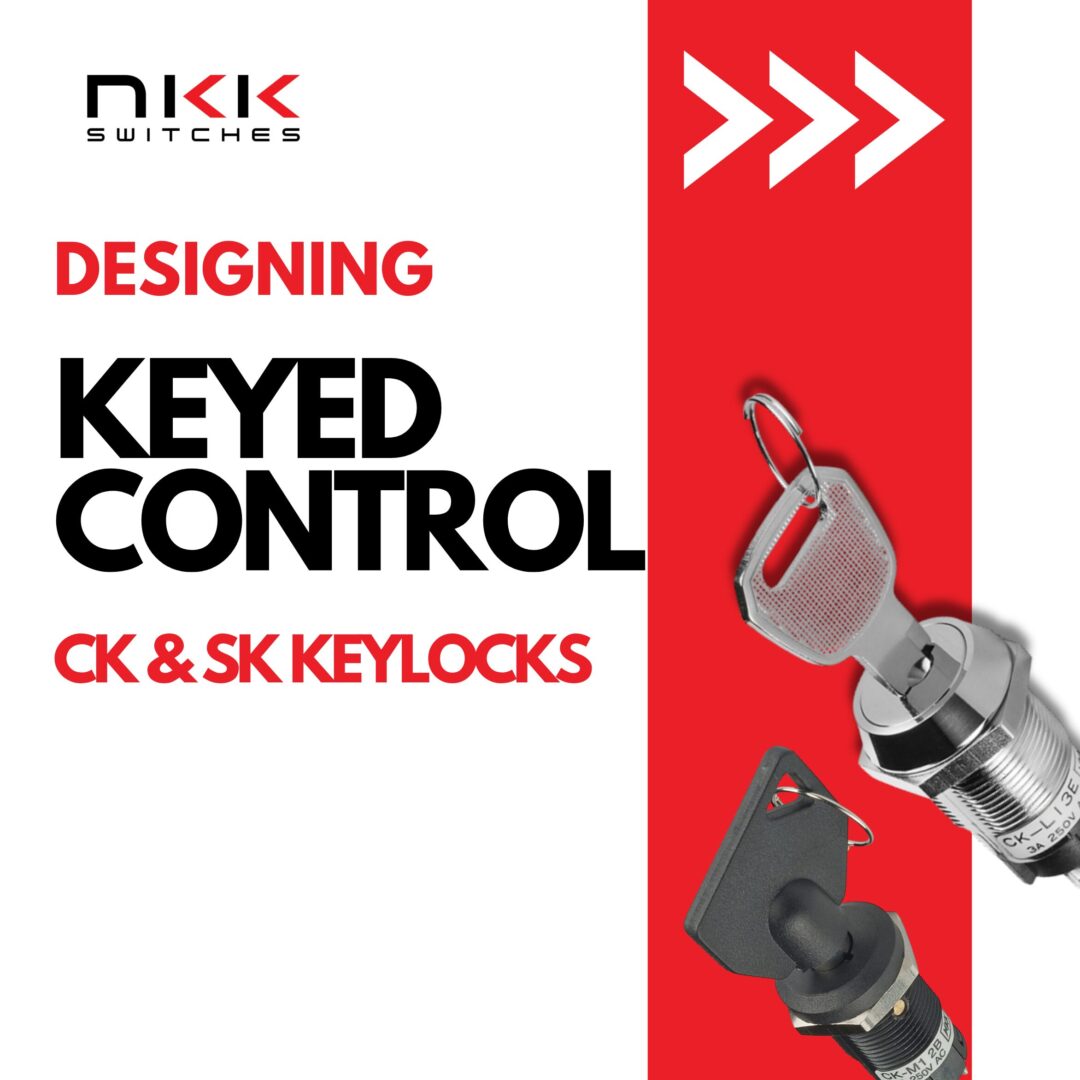
Designing Deliberate Control with SK & CK Series Keylocks
November 2025
Engineers need mode selection that stays where it’s set – through vibration, ESD, and frequent use.
This month’s spotlight shows NKK keylocks on the board and at the panel, turning keyed authority into logic level enables and power level control. The examples span PLCs, SCARA robots, handheld controllers, lasers, bridge alarms, and robot cells.
For a quick summary of the keylock lineup, check out our Keylock Switches Guide
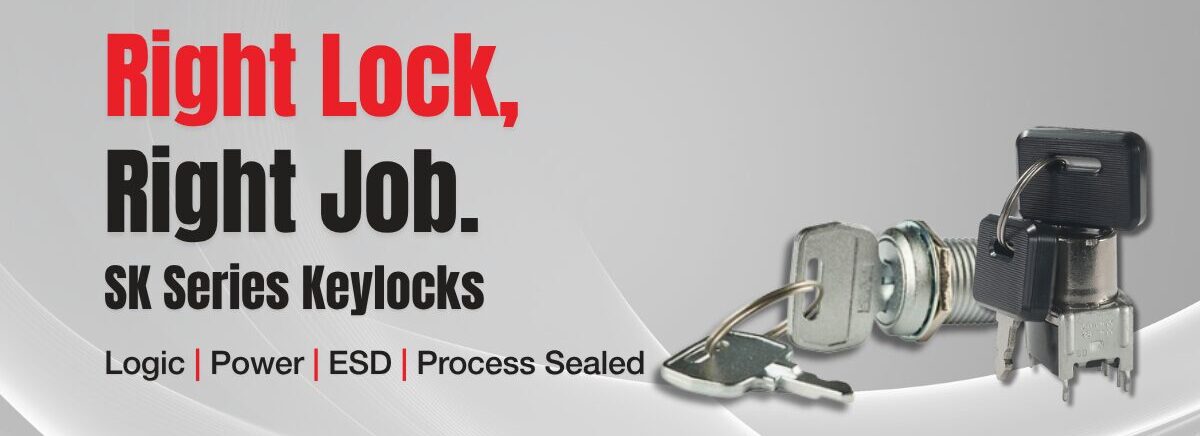
Every SK Series keylock is built for a specific job.
From logic level enables to power selection, ESD-sensitive circuits to automated processing on PCBs, the SK Series reflects design choices shaped by practical demands, including direct input from OEMs.
Snap-in Antistatic Keylock
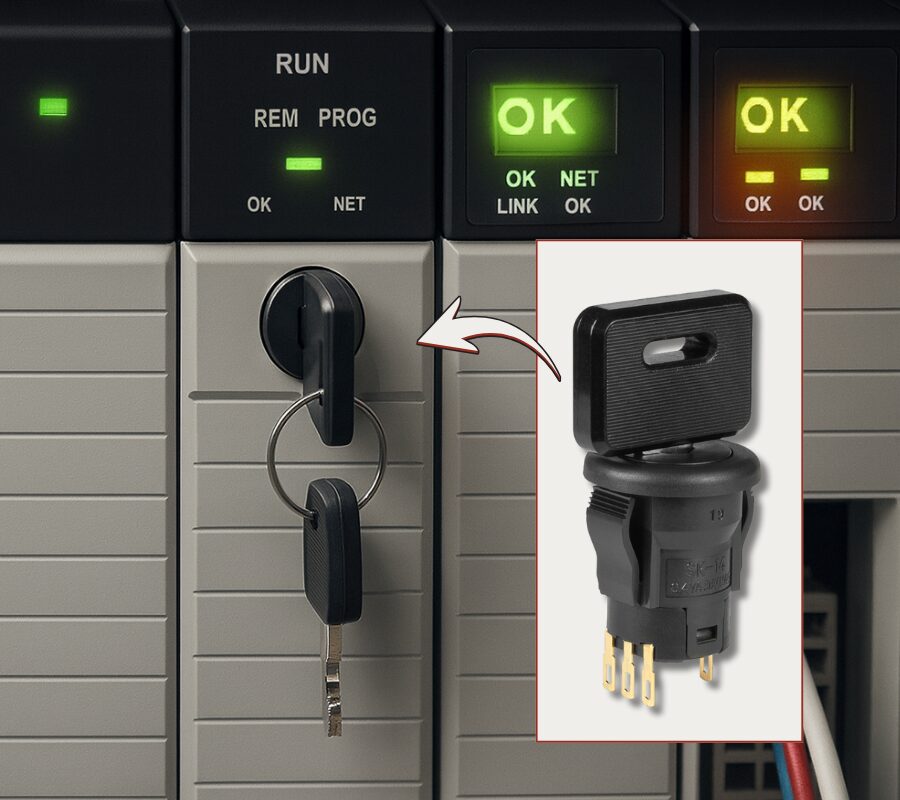
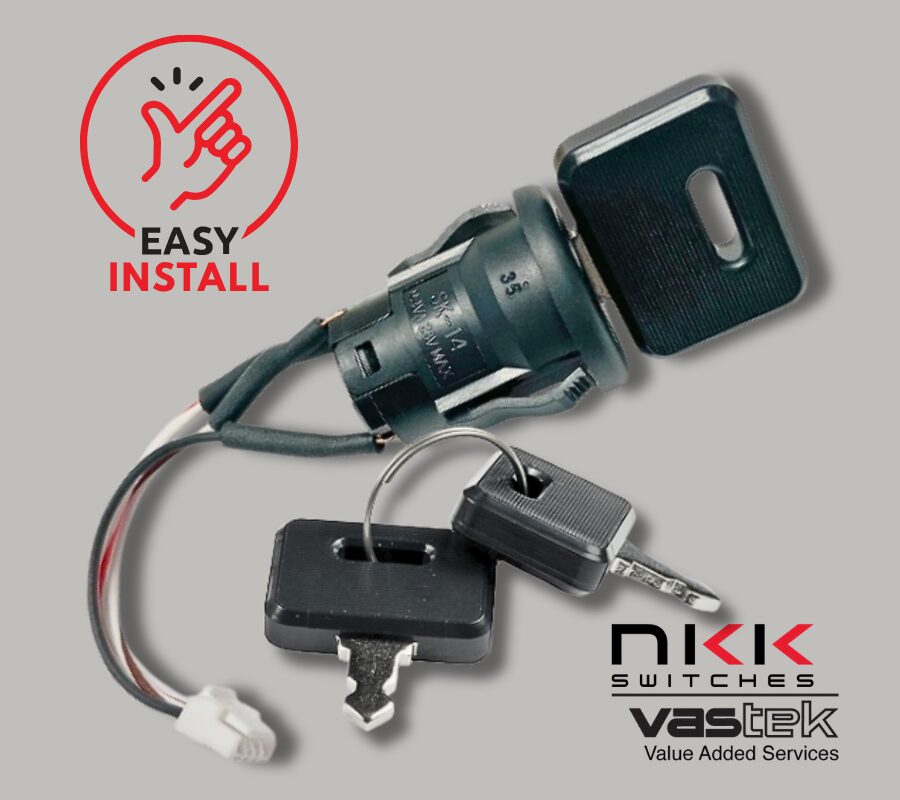
When a PLC OEM launched a modular platform, they needed a logic level keyed selector that installs quickly on the front panel, resists ESD, and works across a wide temperature range. NKK supplied a custom SK Series Antistatic Snap-in keylock wired for two positions with discrete outputs, and with key removal limited to the two positions.
Built for Panel Designs
The keylock snaps into place, has an insulating polyamide housing, and is rated for low-level switching. The defined key removal pattern prevents unauthorized handoffs, and through NKK’s Value-Added Services the assembly ships pre-wired with harness and connector for drop-in installation. It has remained the specified part across the platform for years.
Explore the Components
Low Security Keylock
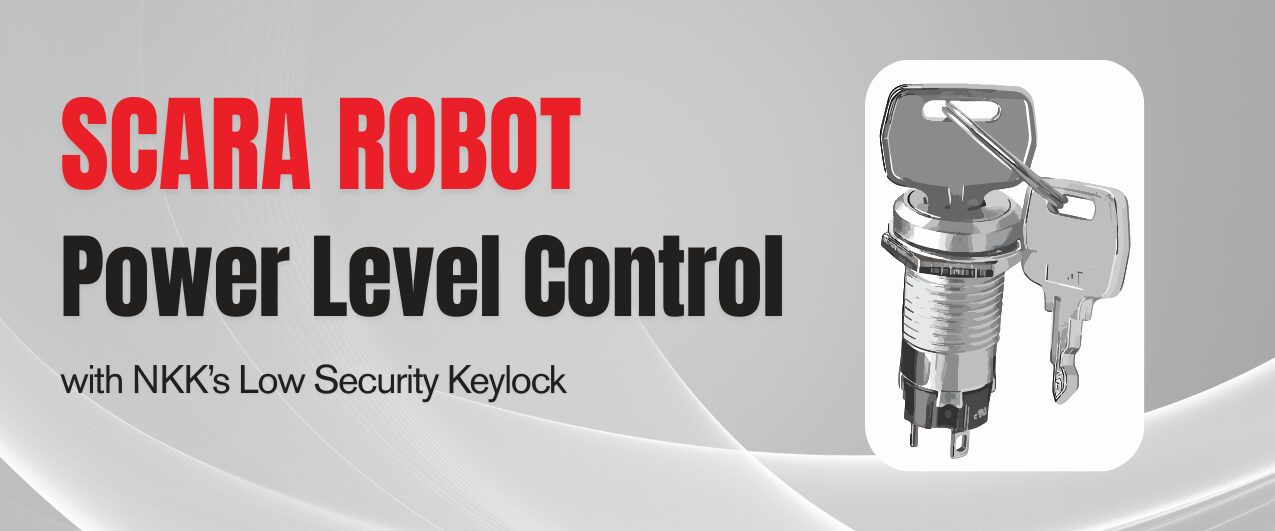
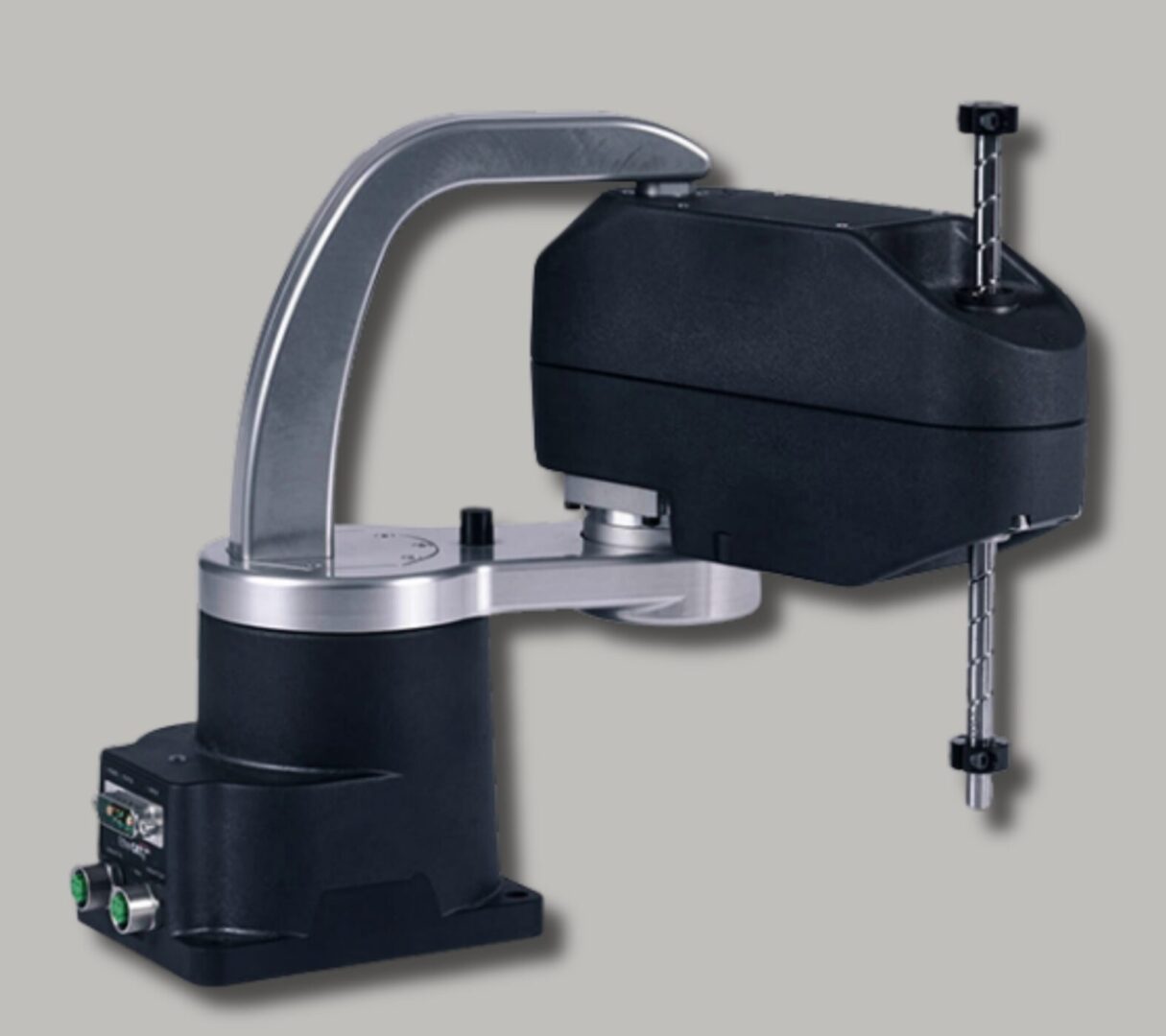
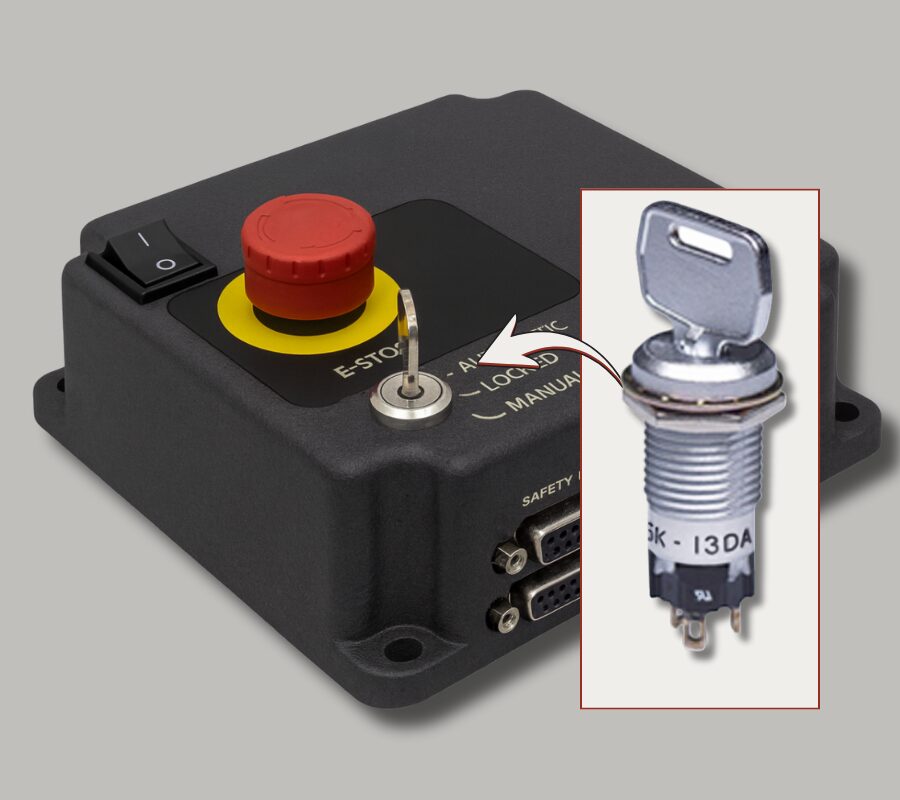
A four-axis tabletop SCARA robot, recognized for its compact size and precision, completes hundreds of cycles per minute and is widely used in pick-and-place, assembly, and laboratory automation. Its external controller uses a SK Series Low Security keylock with silver power level contacts to manage operating modes.
Built for High Density Designs
The 12mm bushing simplifies panel cutouts and supports dense mounting, while the contact design provides reliability in frequent-use applications. With a defined key removal pattern, operators select Automatic, Locked, or Manual, using the key as a physical token of authority to control mode changes in high-speed systems.
Explore the Components
Process Sealed Keylock
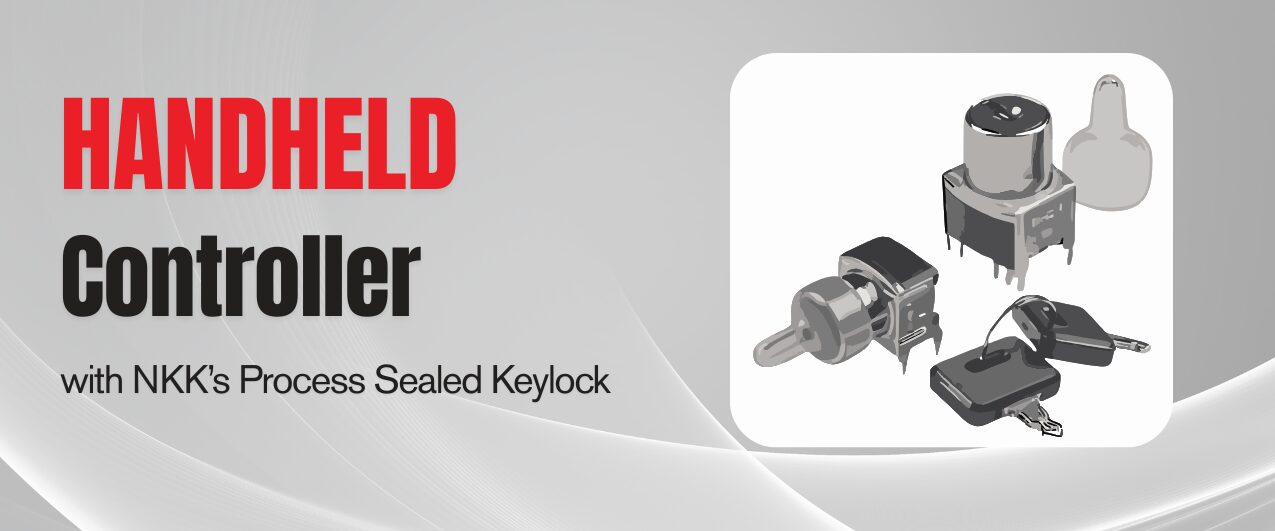
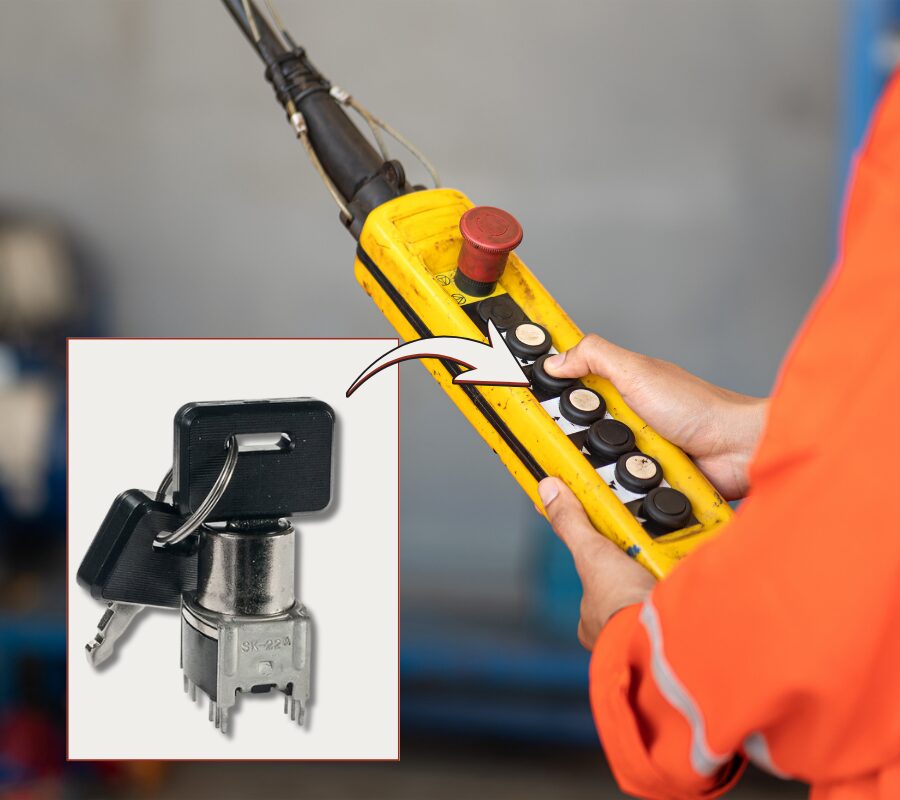
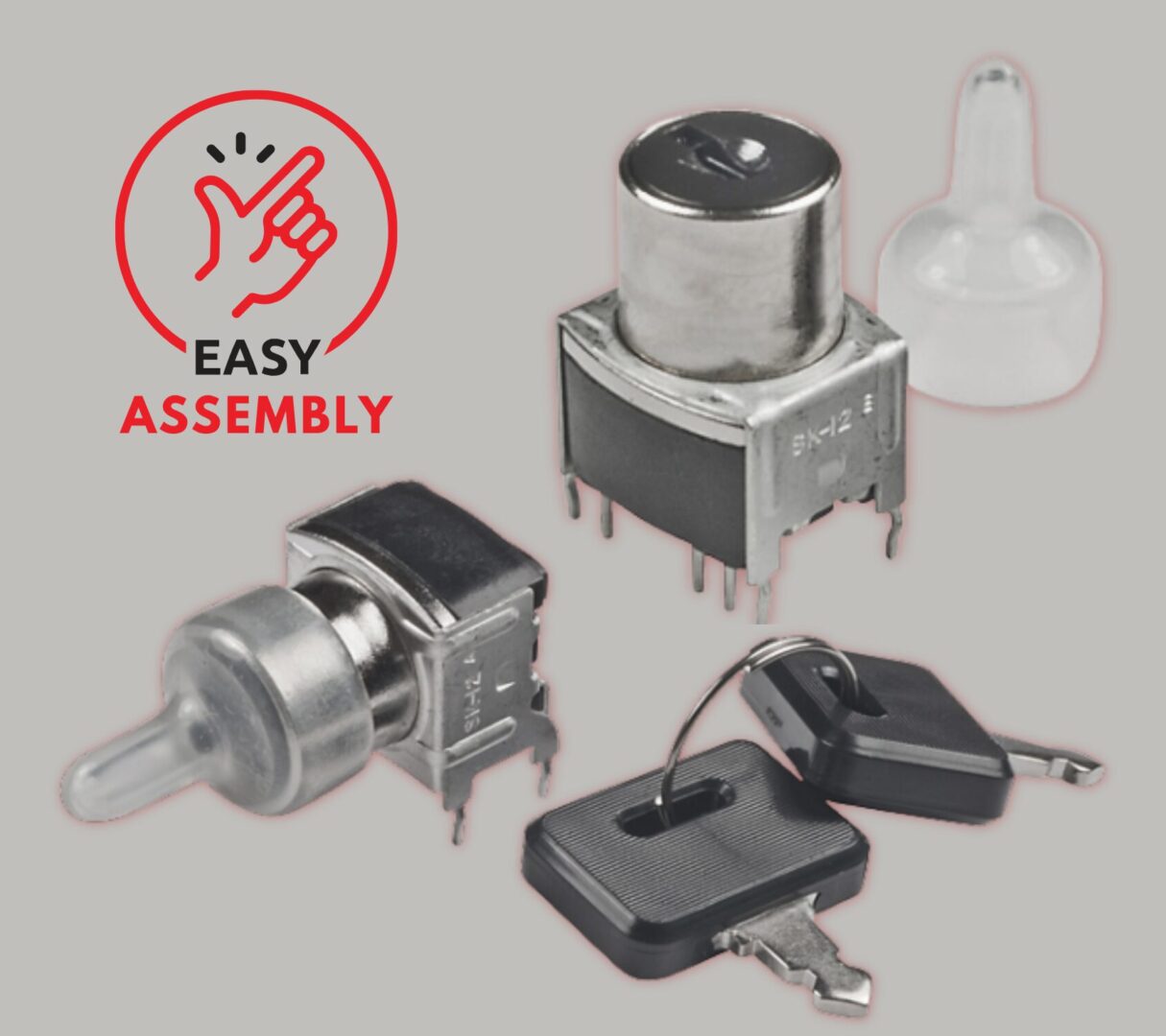
A handheld controller uses a keyed enable so motion stays inhibited until an authorized turn. The SK Series Process Sealed keylock provides a logic level enable input and allows key removal only in the safe position; it does not switch main power.
Built for Automated Assembly
On the PCB, the keylock drives the low level enable only when turned. A sealed body with a disposable wash boot protects contacts for automated processing. Shallow behind panel depth fits handhelds, and crimped bracket legs secure PCB mounting. Self-wiping contacts and a positive detent keep the position clear.
Explore the Components
Antistatic Process Sealed Keylock
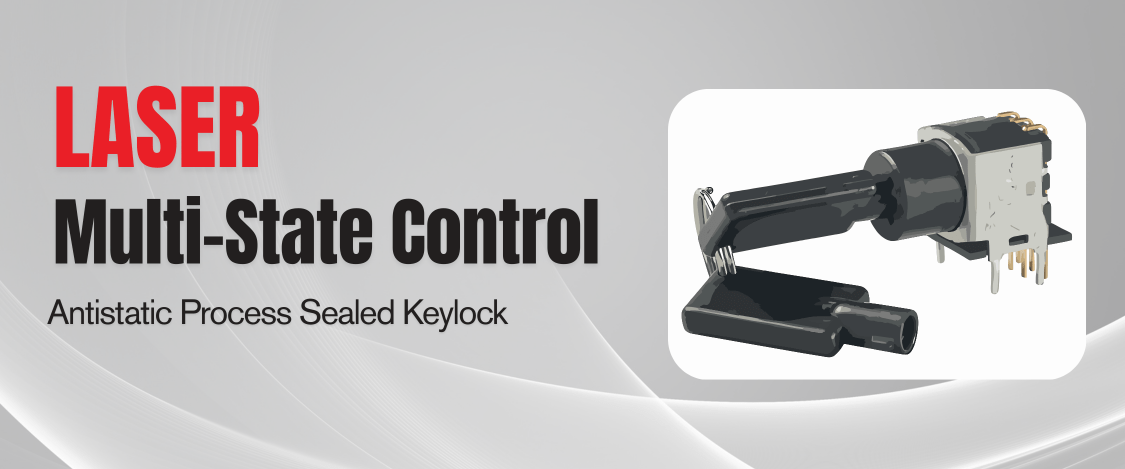
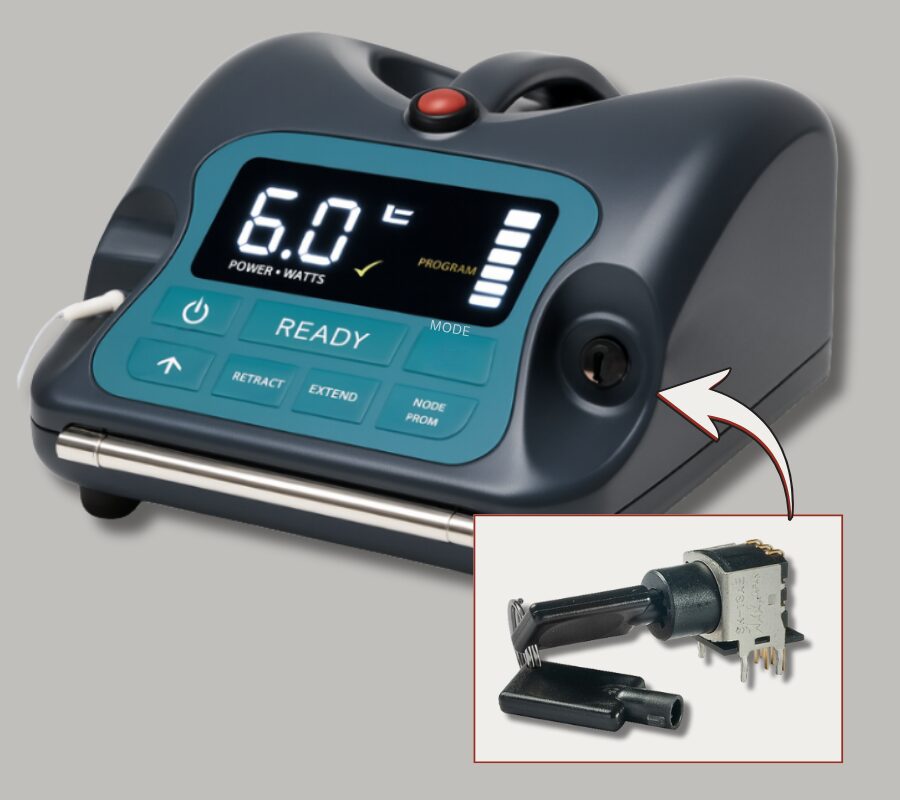
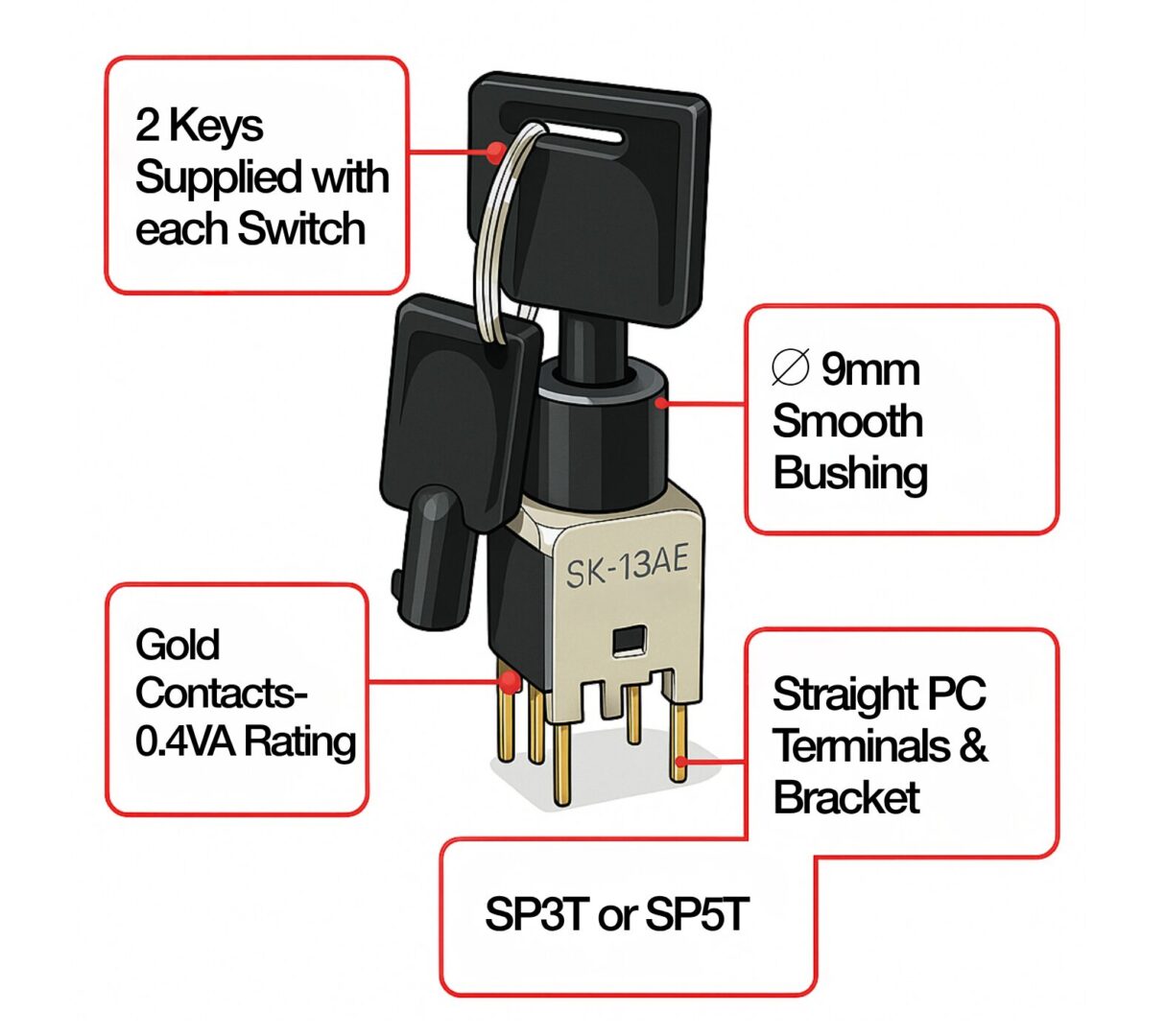
A laser controller uses the SK Series Antistatic Process Sealed keylock to drive multi-state logic. Available in SP3T or SP5T, one key selector outputs low-level states for setup, alignment, arming, and emission. Emission remains inhibited until the required state is selected, or other safety conditions are met.
Why the Switch Fits
A fully sealed body with internal o-ring, gasket, and insert-molded terminals supports automated processing. The insulated housing and bushing withstand 15 kV ESD, and crimped bracket legs secure the PCB during assembly. In use, a spring-and-ball detent gives a distinct feel, and self-wiping contacts keep the signal stable.
Explore the Components
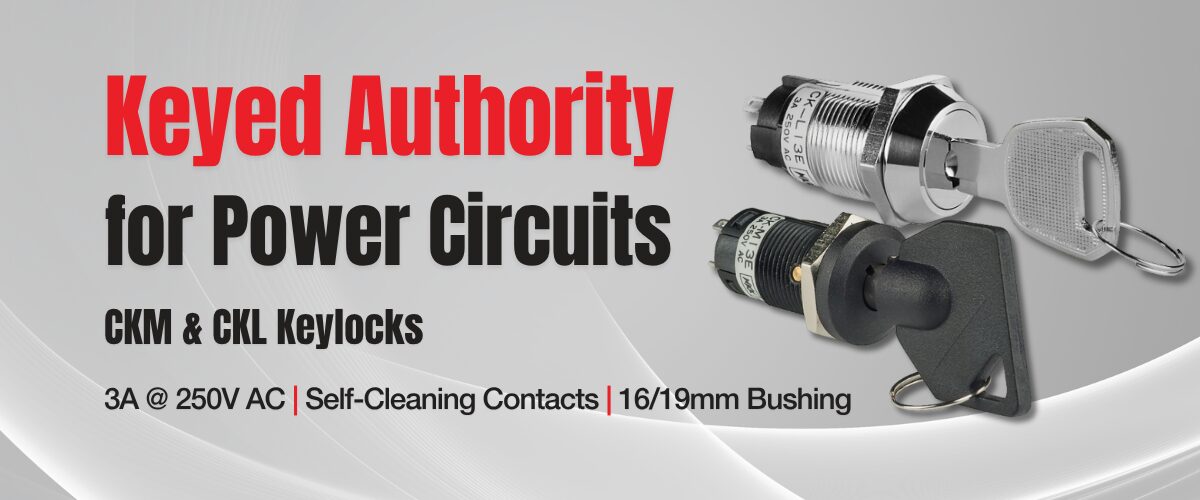
Every CK Series keylock is built to secure critical operating states.
From power rated mode selection in PLC enclosures to access on robot teach pendants, the CK Series reflects high security design choices shaped by real-world demands for deliberate keyed control.
CK Series Power Level, Antistatic 16mm Keylock
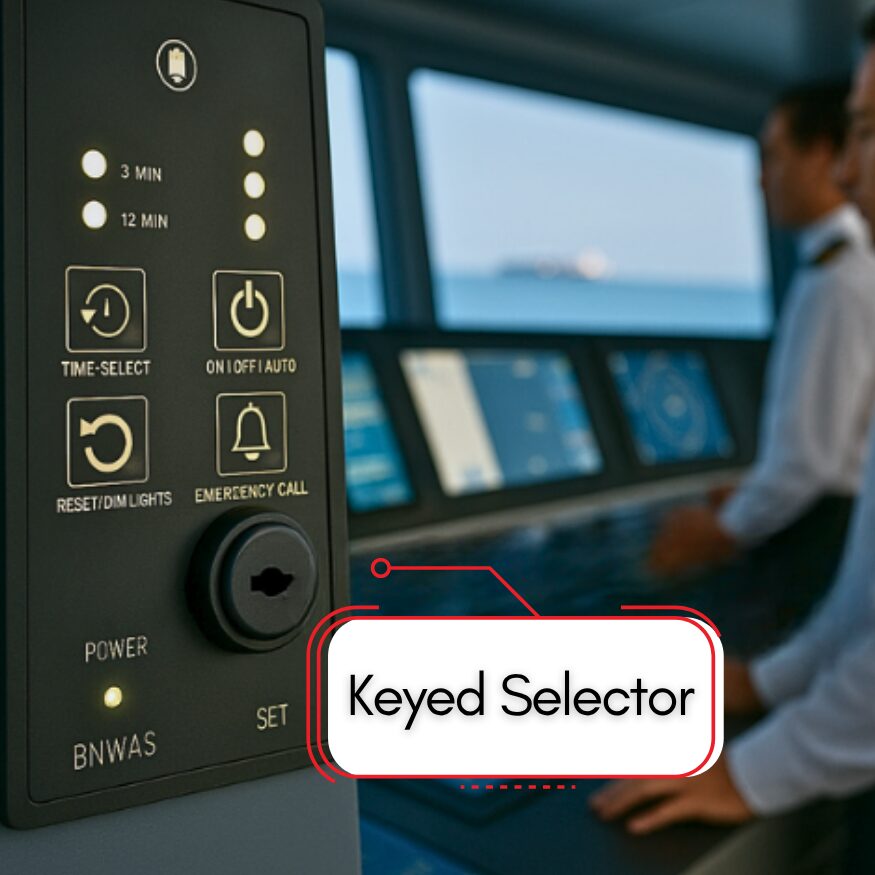
A shipboard bridge watch alarm checks that the Officer of the Watch is awake by requiring regular acknowledgments. If there’s no response, it escalates from bridge alarm to backup officer and then to general alarm. Events are recorded to the voyage data recorder, and indicators are typically dimmable for night use.
Gated Control with CKM Keylock
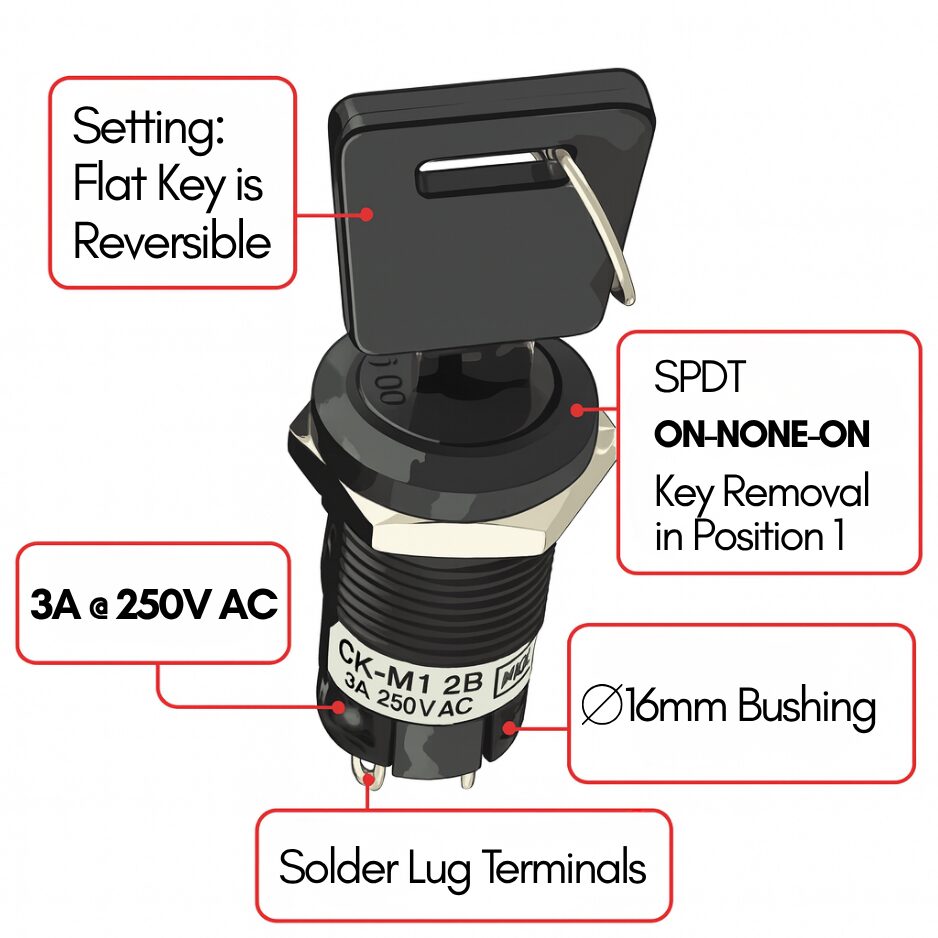
One marine OEM uses NKK’s high security CKM High Security 16mm keylock as the enable selector, while alarm acknowledgment is handled by a tactile pushbutton. Settings can be changed only with a key. The selector is SPDT ON–NONE–ON, and with key removal limited to Position 1, control is gated; no key means no movement, and settings remain as set.
Why the Switch Fits
A fully sealed body with internal o-ring, gasket, and insert-molded terminals supports automated processing. The insulated housing and bushing withstand 15 kV ESD, and crimped bracket legs secure the PCB during assembly. In use, a spring-and-ball detent gives a distinct feel, and self-wiping contacts keep the signal stable.
Explore the Components
Power Level High Security 19mm Keylock
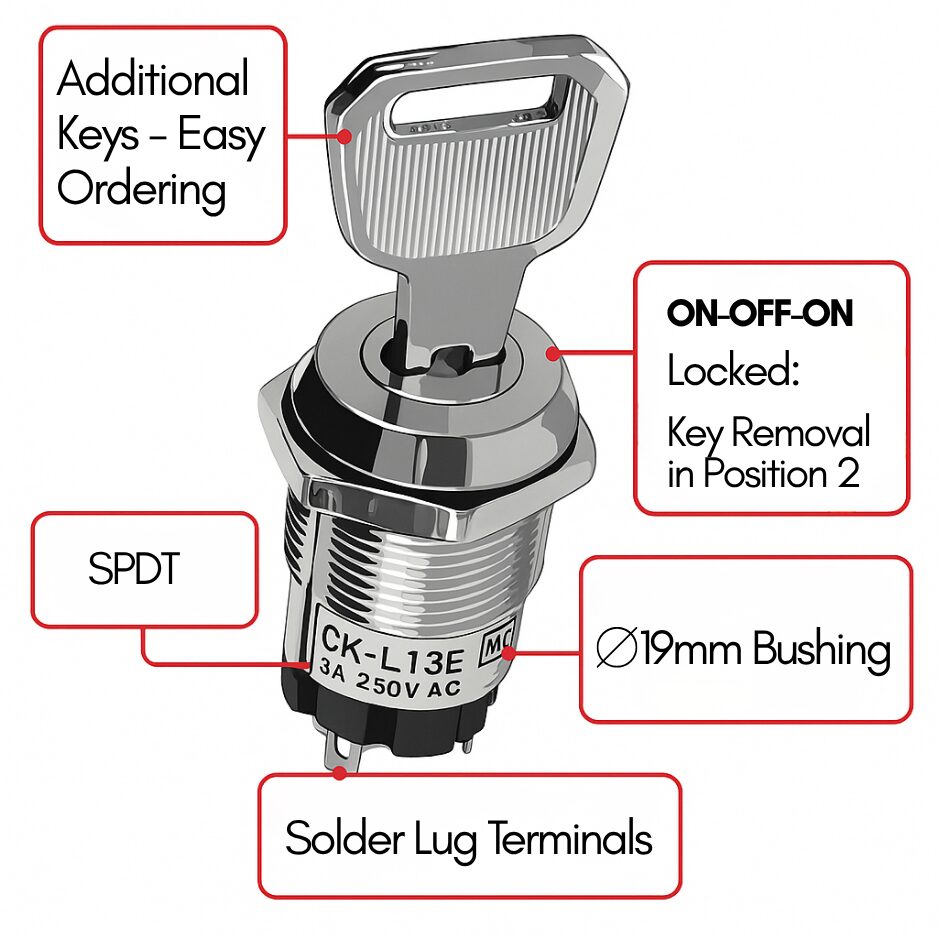
An industrial systems integrator developed a palletized robot cell and specified an NKK CKL 19mm key-operated selector (SPDT ON–OFF–ON) on the controller cabinet, assigning control to the cabinet key holder rather than the HMI operator. Used as a control input, the two ON positions drive separate PLC inputs for Local/Remote; the center OFF is a neutral hand-off; any position change triggers a controlled stop.
Lock and Leave Keyed Selector
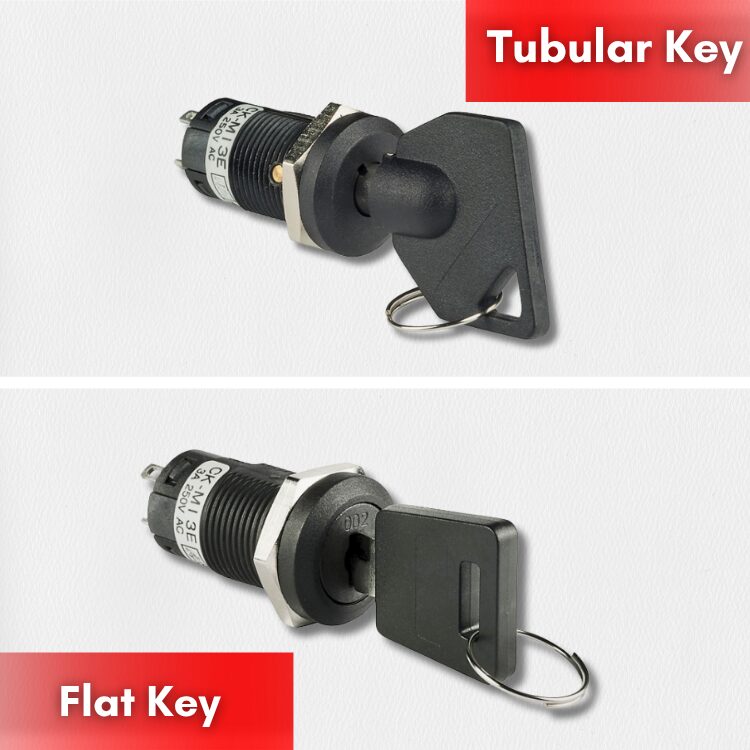
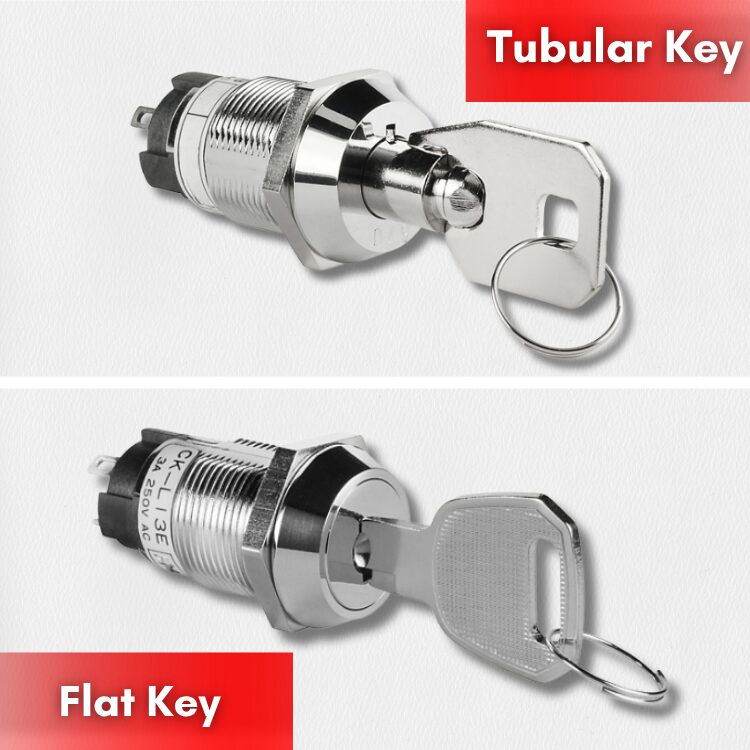
In this install, the integrator uses a 19mm die cast, threaded bushing keylock with a tubular key and push-to-turn action for deliberate adjustments. They chose circuitry for lock-and-leave, with the key removable in Position 2 (center OFF), so the cabinet can be left in a neutral state. The pendant’s three-position enabling device still governs motion during teaching.
Why the Switch Fits
The keylock is labeled LOCAL | LOCK | REMOTE and has 45° maintained detents for a positive, tactile throw. Like the CKM model, it features silver contacts rated 3A @ 250V AC and 1,500V contact-to-case dielectric strength. The vertical rotating switching mechanism with self-cleaning sliding contacts provides high reliability and long operating life, making it ideal for secure, repeatable control in industrial applications

Explore the Components