
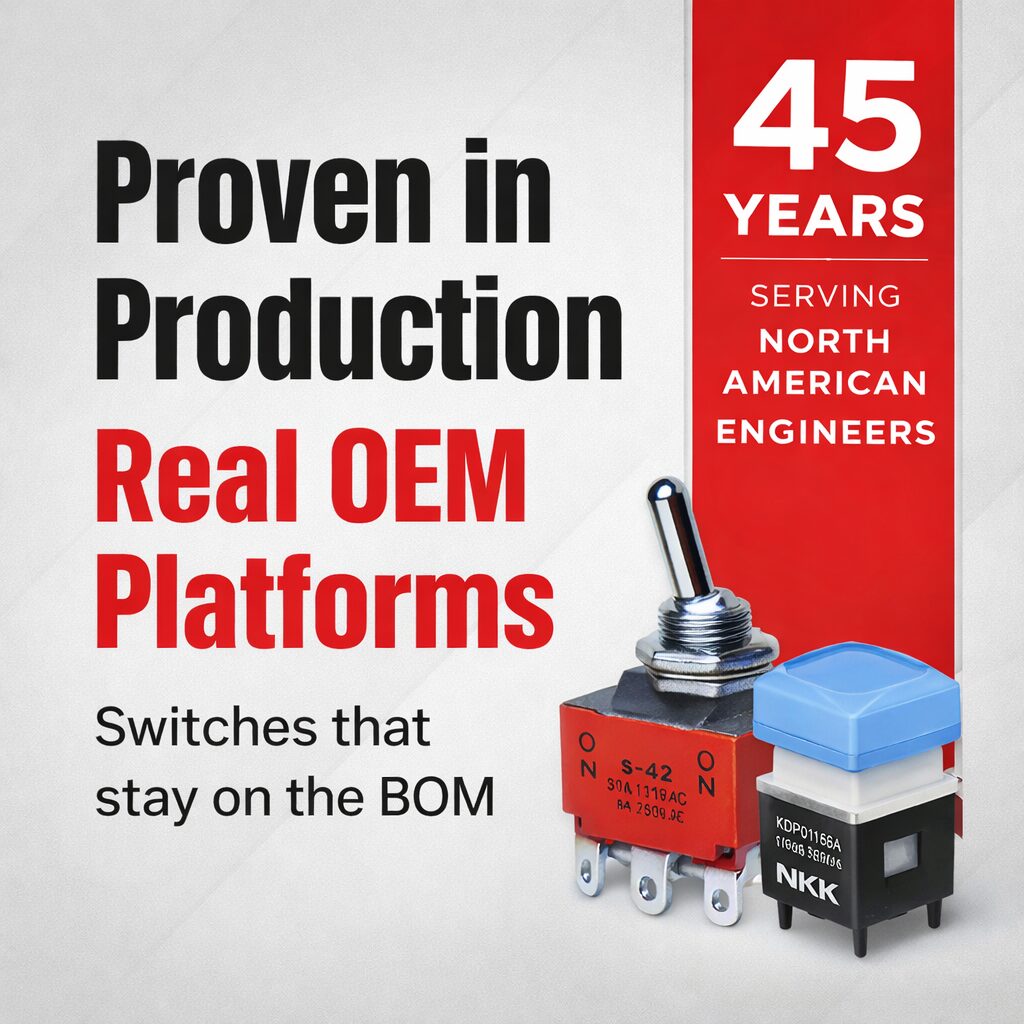
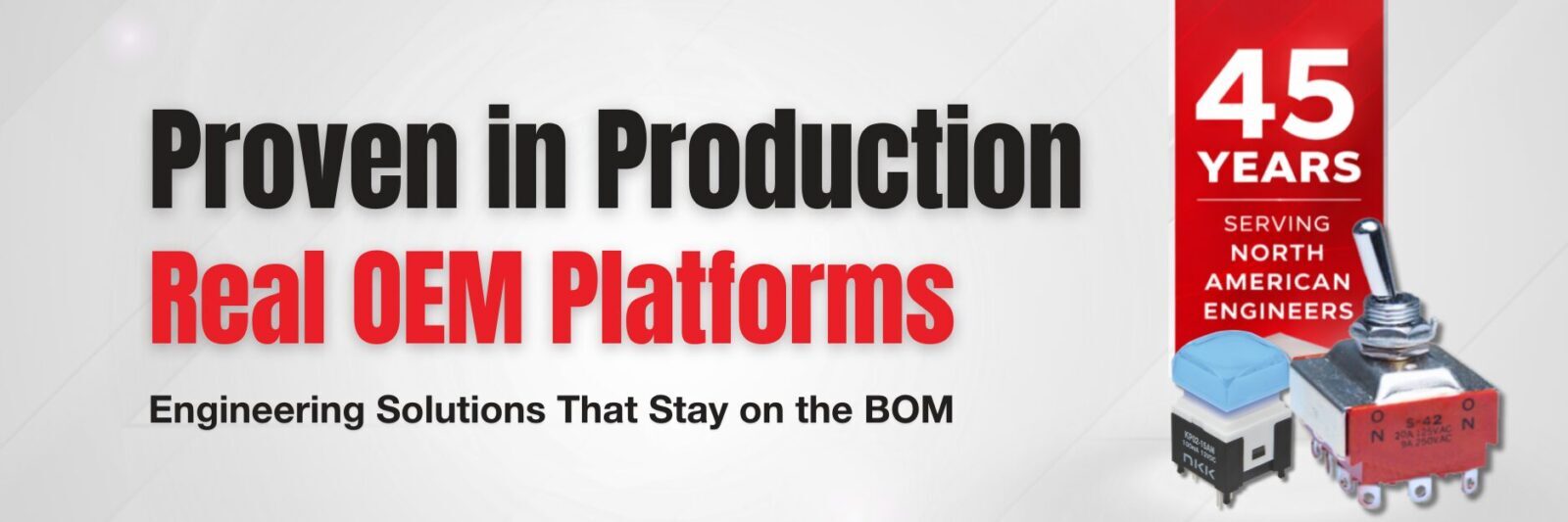
Engineering Solutions That Stay on the BOM
March 2026
When a Catalog Switch Doesn’t Fully Resolve Design Restraints
When a catalog switch does not fully resolve system constraints, the solution must be engineered at the source.
NKK works directly with OEM design teams to refine switching solutions at the construction level. Contact materials, actuation geometry, optical performance, environmental sealing, and termination configuration are refined at the factory to align with system architecture.
In applications such as rail braking platforms and broadcast production control systems, construction-level refinement resolved performance constraints that standard catalog parts could not address.
This is not substitution; it’s engineered integration.
If your platform requires additional refinement, NKK engineers work directly with OEM teams to align switching performance with system architecture.
Evaluate NKK switch construction for OEM system design.
Real platforms demonstrate how construction-level refinement resolves system constraints.
When the architecture demands more
In rail braking systems, emergency actuation frequency may be low, but tolerance for failure is zero. When engaged, the system depends entirely on contract reliability and corrosion resistance under vibration, environmental exposure, and extended service cycles.
The OEM did not need a part number. They needed electrical stability within the braking architecture. Meeting those constraints demanded direct engineering collaboration.
Constraints resolved. Direct Integration.
Working at the design level, NKK configured an S Series medium capacity 4DPDT toggle with custom gold-over-silver contacts for long term corrosion resistance and power level reliability. The switch was integrated into a custom red cap assembly, epoxy-potted for structural stabilization and environmental resistance, and configured with solder lug termination and a dedicated wire harness.
For nearly five decades in North America, NKK has approached switching with engineering discipline and direct access to the factory. Rail platforms demand certainty. We design accordingly.
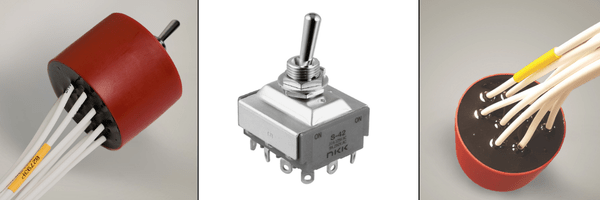
NKK’s Value Added Services support custom printing, assembly, and configuration.
When performance defines the platform
In broadcast control systems, meeting specification is only the starting point. Actuation feel, travel distance, acoustic profile, cap geometry, and light uniformity directly affect operator performance and system usability.
With one OEM, initial switch samples met the datasheet. They did not meet operational expectations. In a live production environment, inconsistency translates directly into hesitation and error. The system did not need another part number. It required mechanical and optical refinement at the construction level.
Feedback translated into mechanical redesign
Detailed feedback defined the engineering brief: reduce travel, eliminate acoustic noise, adjust cap height and angle, and resolve RGB light distribution.
Rather than substitute another component, NKK refined construction at the factory level. Cap geometry was re-engineered, stroke reduced to 3.5mm, and optical diffusion redesigned for uniform color across the switch array. Switches are supplied with pad printed film inserts to OEM legend requirements.
The resulting configuration became the OEM standard across the switcher platforms, remaining on the BOM for nearly a decade and establishing the KP Series as the industry standard in broadcast control surfaces.
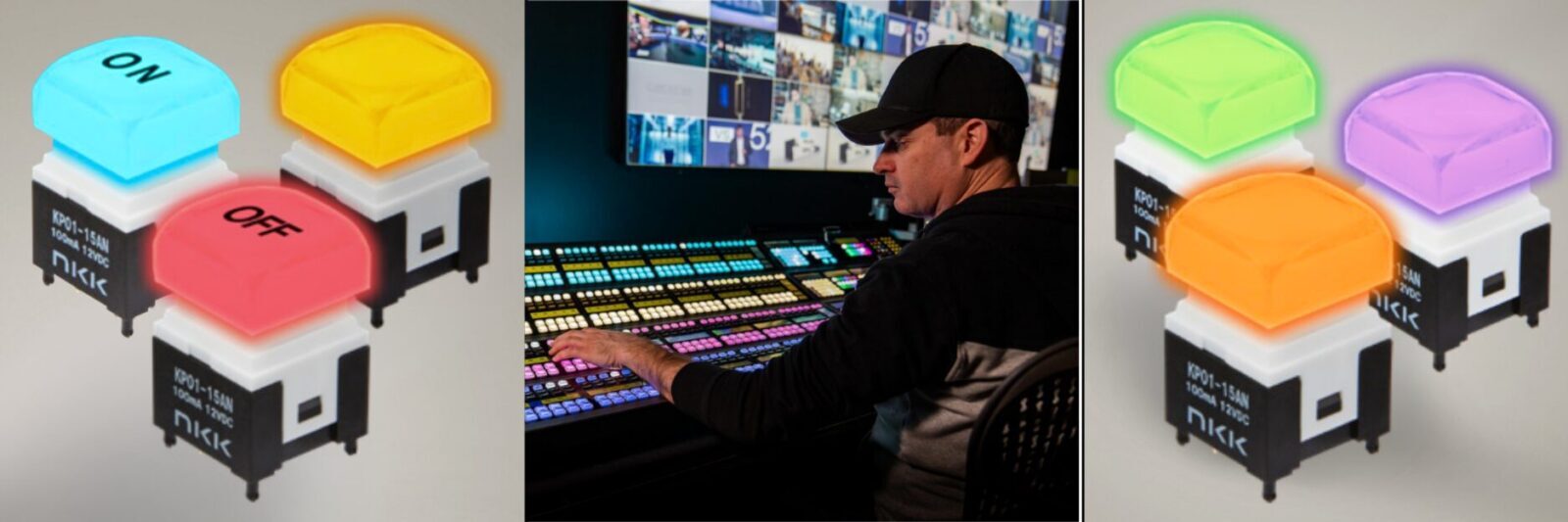
KP Series RGB pushbuttons are available in three button sizes and multiple cap profiles, including home key.
What design challenges are you facing? Start a conversation and work directly with NKK engineers to support your design teams beyond part selection.
Engineering Support for OEM System Design
Evaluate build quality or source production inventory.
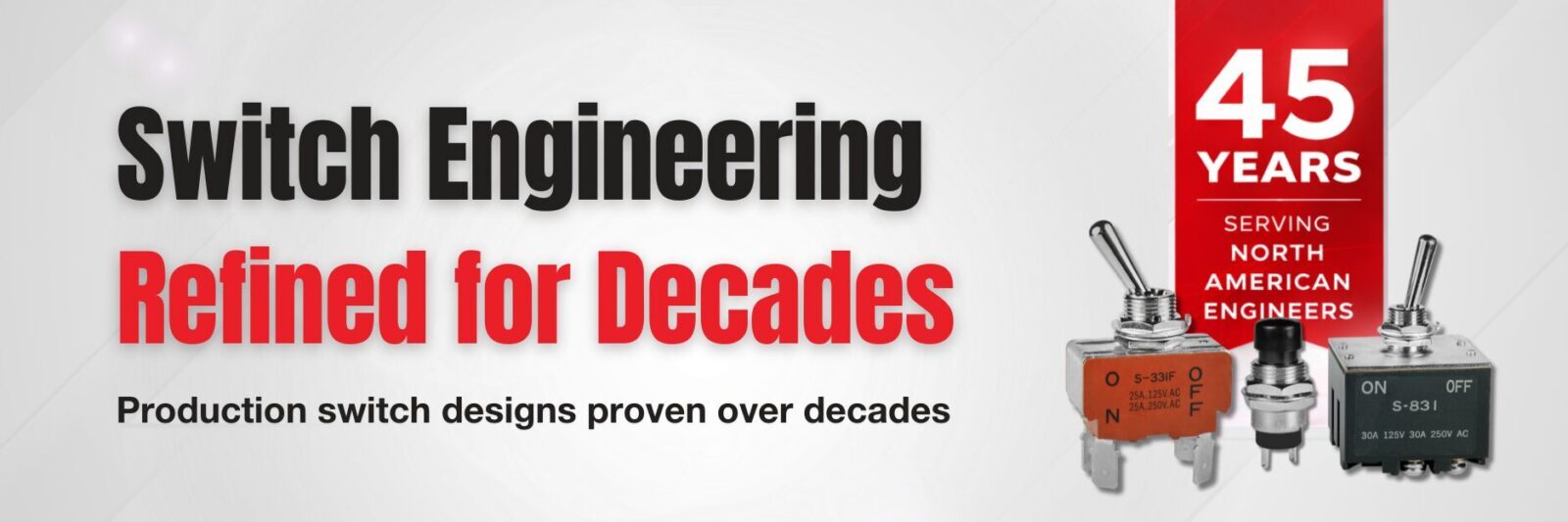
When a design works, engineers don’t replace it. Engineers rarely change components that consistently perform in the field. Once a switch proves reliable, it often remains part of the platform for years of production.
For 45 years, North and South American OEMs have continued specifying NKK switches across successive generations of machine designs.
When equipment operates in continuous duty
Switch solutions for sustained loads
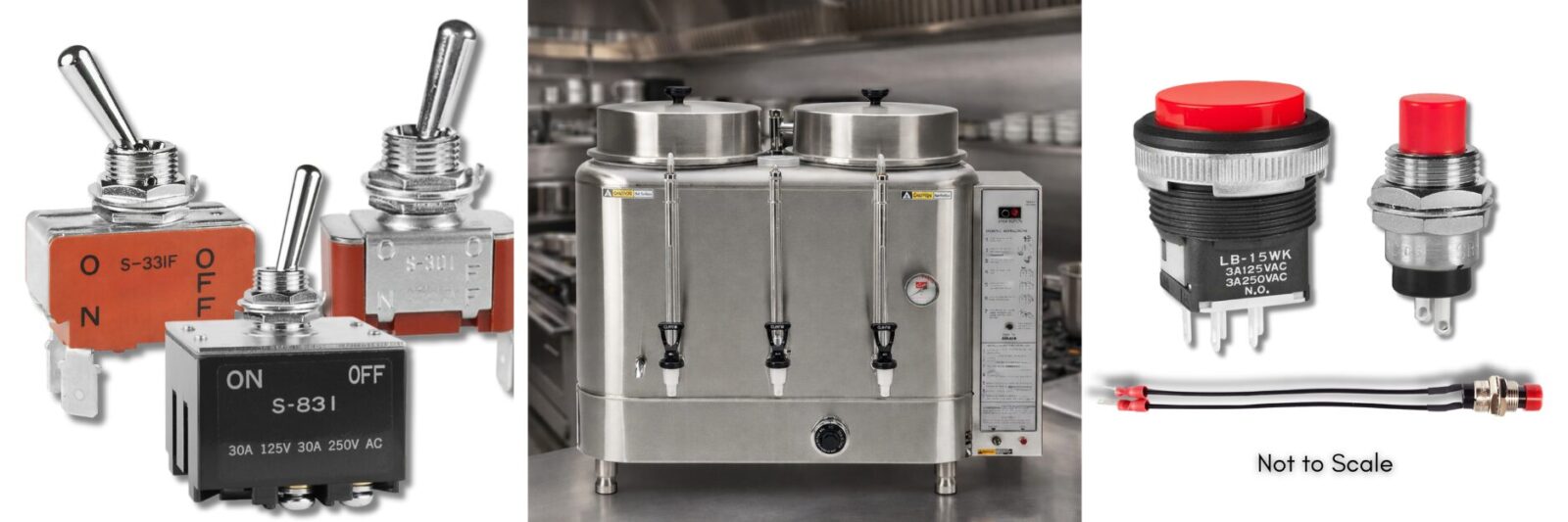
Commercial beverage equipment operates under continuous duty, controlling heating elements, pumps, and dispensing systems that must perform reliably over years of service.
In these environments, switching components must tolerate repeated electrical loads, frequent operator use, and moisture exposure common in commercial kitchens.
Switch solutions carried through machine generations
A commercial beverage equipment manufacturer specifies multiple NKK switch configurations across its product platform, carrying them through successive generations of machine designs.
These systems incorporate multiple switch types supporting power distribution, subsystem control, and operator interface functions across the platform.
Configured and shipped for production installation
Across multiple beverage equipment product lines, these switch configurations were specified with production assembly requirements in mind. Toggle switches use quick connect terminals to simplify wiring during manufacturing, while pushbutton assemblies are supplied with harness or quick connect termination to support rapid installation.
The following switch configurations are specified across these production platforms.
| Component | Circuit | Rating | Description | ||
| S831 | 3PST |
| • High capacity standard size toggle • Screw lug termination • Bat or flatted lever options • Splashproof boot assembly available | ||
| S331F | DPST |
| • Medium capacity toggle • Quick connect terminals • Screw lug and solder lug options • Splashproof boot assembly available | ||
| S301F | SPST |
| • Medium capacity toggle • Double pole options available • Available with multiple termination options • Splashproof boot assembly available | ||
| EB2011-BA | SPDT |
| • Light touch miniature pushbutton • Power and logic level • ON (ON) • Cap options and colors available | ||
| SB4011NOM | SPST |
| • Momentary pushbutton • OFF (ON) • Epoxy sealed terminals • Optional cap colors available | ||
| LB15WKW01/U | SPDT |
| • ON (ON) momentary pushbutton • Minimal behind panel depth • Solder lug or quick connect terminals • IP65 rated panel sealed • Snap-action contacts with red cap | ||
Design continuity is not limited to large industrial platforms. It also appears in compact systems where space constraints, weight, and reliability are critical.
Switch design specified since 2001
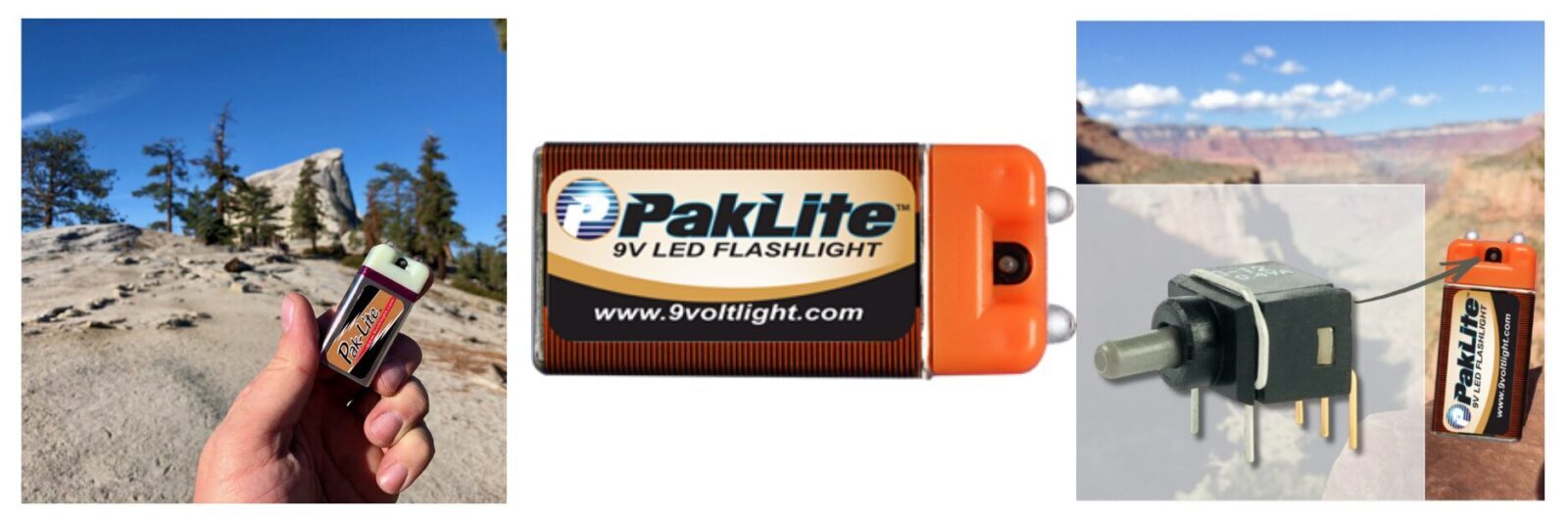
Pak-Lite flashlights were originally developed for a 2,600-mile hike along the Pacific Crest Trail from Mexico to Canada, where dependable lighting and minimal weight were essential.
The resulting design centers on a compact lighting platform that attaches directly to a standard 9V battery, creating a rugged, portable system intended for extended outdoor use.
“We’ve used the NKK G13AH toggle switch since 2001. Across 100,000+ Pak-Lite units produced, the reliability, sealing, and consistent feel of this switch have continued to protect our brand and reduce warranty and support burden.”
Inventor and Product Designer, Pak-Lite Gear
Carried through machine generations
The flashlight integrates NKK’s G Series process sealed ultra-miniature toggle switch, G13AH, providing clear on/off control within a compact assembly designed for reliability in field conditions. The switch weighs approximately 0.25 gram and features a fully sealed body construction, protecting the internal mechanism from moisture and environmental exposure common in outdoor handheld equipment.
These are not isolated examples. They show how customers continue specifying proven switch designs across long production life cycles. If your platform requires alignment at the interface level, start a conversation with our engineering team.
Engineering Support for OEM System Design
Evaluate build quality or source production inventory.